

Cart
0
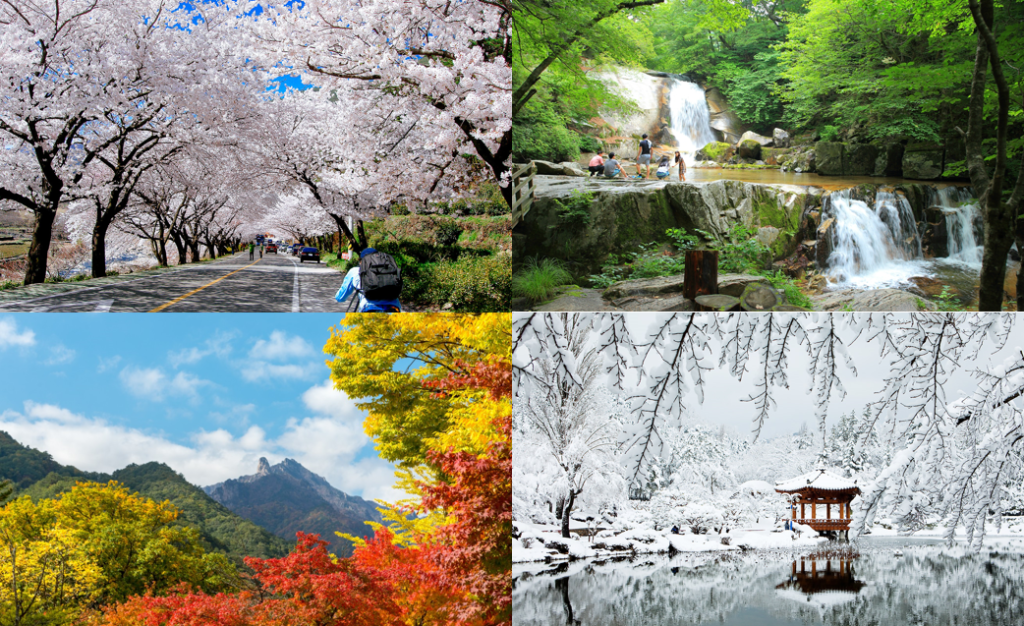
One of the most beautiful things about South Korea is that it has four very distinct seasons – and each one feels like a completely different country.
-
Spring brings mild weather and cherry blossoms.
-
Summer is hot, humid and full of festivals and beach days.
-
Autumn offers clear skies and bright red-yellow leaves.
-
Winter is cold, crisp and perfect for snow and ski trips.
There is no “wrong” time to visit Korea – but there is a best time depending on what kind of traveller you are.
Below, we’ll break down each season with:
-
Typical weather & months
-
What the season is best for
-
Who will love it (and who might not)
Quick Overview of Korea’s Seasons
To get the big picture first:
-
Spring (March–May):
Mild, dry, cherry blossoms in late March–early April, 5–20°C. Best for city sightseeing and flowers. -
Summer (June–August):
Hot, humid, monsoon rain in late June–July, 22–32°C. Best for beaches and festivals. -
Autumn (September–November):
Clear, cool, low rainfall, 10–22°C. Stunning autumn foliage mid-October to early November. -
Winter (December–February):
Cold and dry; below freezing in many regions, snow in the mountains. Best for ski resorts and winter lights.
Now let’s look at each season in detail – and which travel style it fits.
Spring in Korea (March–May)
Best for: First-time visitors, city lovers, cherry blossom fans
Most travel guides agree: spring is one of the best times to visit South Korea, especially for first-time travellers.
Weather & vibe
-
Temperatures around 10–20°C – not too hot, not too cold.
-
Mostly dry, clear days, especially from April onwards.
-
Trees explode into fresh green and pastel pink.
Cherry blossom season
Cherry blossoms usually bloom from late March to early April, starting in Jeju and the south, then moving north to Busan and Seoul.
- Jeju: around late March
- Busan: just after Jeju
- Seoul: usually early April
Peak bloom only lasts about a week, and heavy rain or wind can shorten it, so you need a bit of luck with timing.
Perfect if you:
-
Are visiting Korea for the first time
-
Want to see Seoul, Busan, Gyeongju, Jeju in comfortable temperatures
-
Love parks, palaces and hanok villages with flowers and blue skies
-
Enjoy café-hopping and city walks without sweating or freezing
Keep in mind:
-
It’s peak tourist season – higher prices and more crowds, especially during cherry blossom week and public holidays.
-
Book accommodation and KTX/flight tickets early if you’re targeting cherry blossoms.

Summer in Korea (June–August)
Best for: Beach lovers, festival fans, people who don’t mind heat & humidity
Summer is intense – sometimes in a good way, sometimes not.
Weather & vibe
-
Temperatures often 23–30°C or higher, especially in cities.
-
Monsoon season usually hits between late June and July, bringing heavy rain and high humidity.
-
After the rains, August can be very hot but with deep blue skies.
Best experiences in summer
-
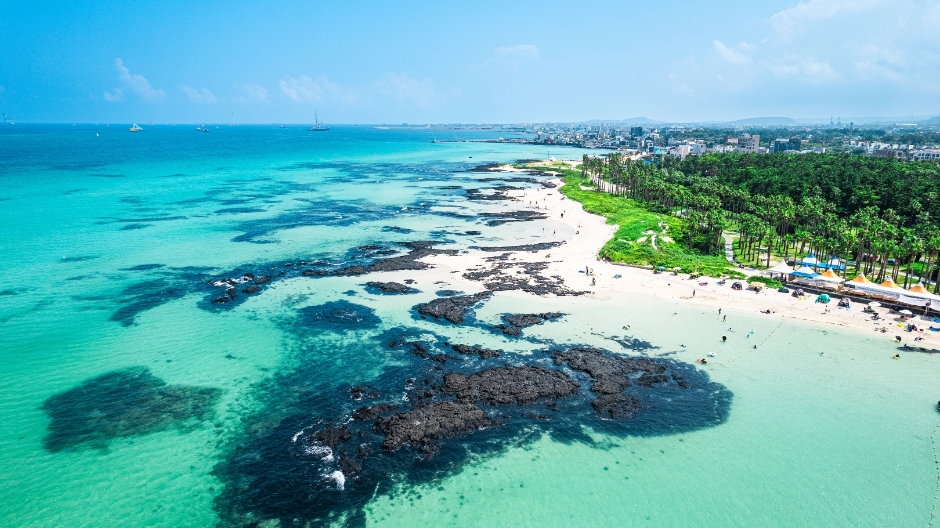
Beaches:
-
Summer festivals:
Boryeong Mud Festival, Busan Sea Festival and various music festivals bring a very energetic mood.
Perfect if you:
-
Love hot weather and don’t mind sweating
-
Want to swim, surf or relax at the beach
-
Are into nightlife and open-air festivals
-
Prefer long daylight hours and a very social atmosphere
Keep in mind:
-
Humidity is real – you’ll want light clothes and good skincare.
-
Monsoon rain can cancel hikes or outdoor plans; build flexibility into your schedule.
-
Air conditioning is strong everywhere – bring a light layer for subways and cafés.
Autumn in Korea (September–November)
Best for: Hikers, photographers, couples, “I want perfect weather” people
If spring is the most famous season, autumn might secretly be the best overall.
Weather & vibe
-
Clear blue skies, low humidity, comfortable 10–22°C temperatures.
-
Very little rain compared to summer.
-
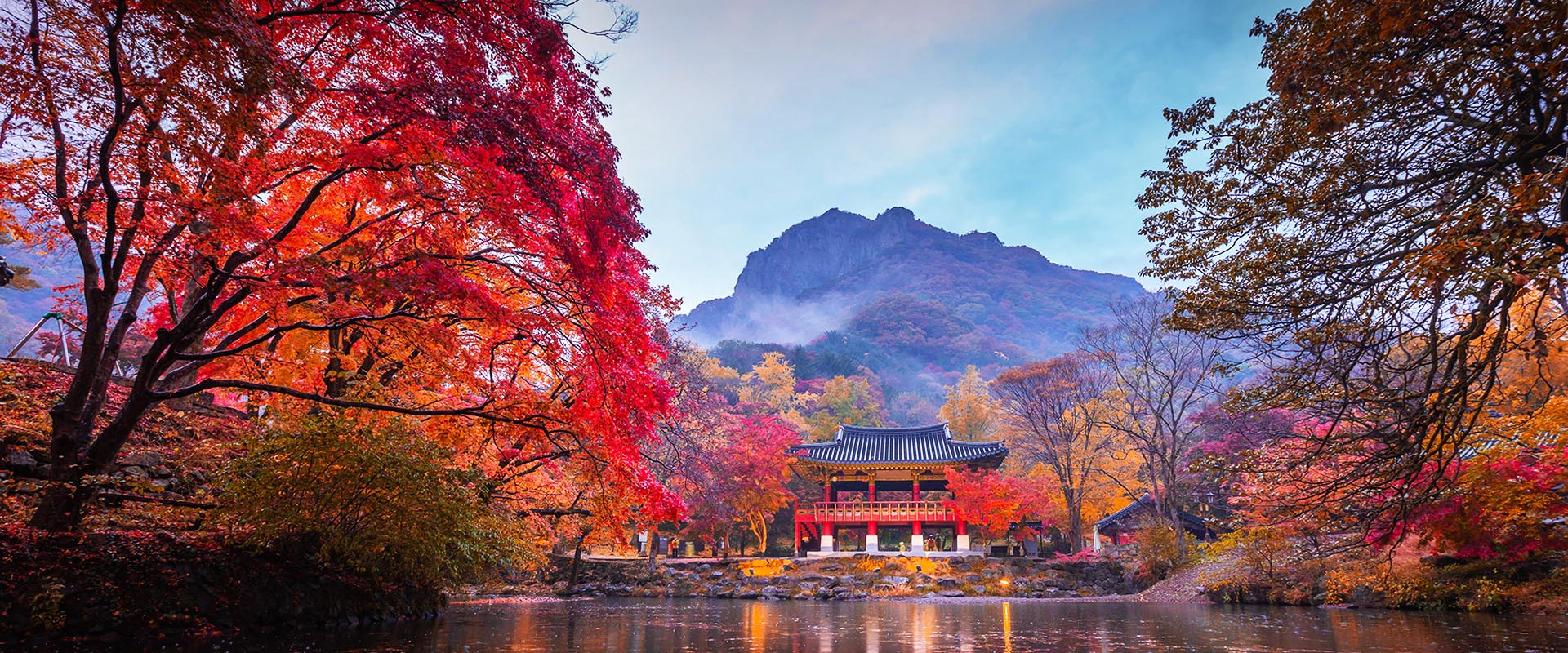
Mountains and parks turn red, orange and yellow.
Autumn foliage
- The nicest fall colours are usually from mid-October to early November: Seoraksan, Odaesan, Jirisan turn first (mountain regions).
-
Then cities like Seoul, Busan, Gyeongju follow.
Popular places to enjoy the foliage:
-
Seoul’s palaces (Gyeongbokgung, Changdeokgung), Namsan, Seoul Forest
-
Naejangsan National Park, Seoraksan National Park
Perfect if you:
-
Love hiking or nature walks
-
Want to photograph temples, cityscapes and hanok villages in autumn colours
-
Prefer cool, dry weather for both cities and countryside
-
Like cosy café days and evening strolls without extreme temperatures
Keep in mind:
-
Autumn is also considered a best time to visit, so weekends in famous parks may be busy.
-
Pack layers – warm in the sun, cool in the shade and evenings.
Winter in Korea (December–February)
Best for: Skiers, snow lovers, budget travellers (outside holidays)
Winter in Korea is cold but beautiful – especially if you like snow and clear air.
Weather & vibe
-
Temperatures often drop below 0°C in Seoul and inland; wind can make it feel colder.
-
Inland and northern regions see regular snow, especially in the mountains.
-
Air is dry and the skies are often very clear.
Best winter experiences
-
Ski resorts:
Resorts like Vivaldi Park, Yongpyong, Alpensia in Gangwon-do offer skiing, snowboarding and sledding. -
Winter lights & city mood:
Seoul, Busan and other cities decorate streets, cafés and malls with Christmas and New Year lights. -
Hot food & jjimjilbang:
Winter is perfect for hot stews (jjigae), barbecue, and spending time in Korean saunas (jjimjilbang).
Perfect if you:
-
Want to combine city trip + ski trip
-
Enjoy cold, crisp air more than heat and humidity
-
Travel on a tighter budget – except around Christmas/New Year and Lunar New Year, prices and crowds are usually lower than in spring/autumn.
Keep in mind:
-
You’ll need proper winter clothes: thermal layers, gloves, hat, good shoes.
-
Some hiking trails can be icy; only attempt winter hiking if you have the right gear.

Best Season by Travel Type – Cheat Sheet
If you don’t want to read everything and just need a quick answer:
-
First-time visitor (Seoul + 1–2 cities):
→ Spring (late March–April) or Autumn (October). -
Cherry blossom lover:
→ Late March–early April, depending on region (Jeju first, then Busan, then Seoul). -
Hiking & nature (Seoraksan, Hallasan, national parks):
→ Late spring (April–May) and autumn (late September–November). -
Beach & festivals (Busan, Jeju):
→ Late June–August, avoiding the heaviest monsoon period if possible. -
Winter sports & cosy city trip:
→ December–February for ski resorts + Seoul/Busan lights and cafés. -
Budget & fewer crowds (accepting some weather risk):
→ The shoulder weeks: early March, late May, early September, late November.
Final Thoughts: There’s No “Wrong” Time to Visit Korea
Instead of asking “When is the best time to visit South Korea?” a better question is:
“What kind of trip do I want?”
-
Flowers and pastel colours? → Spring
-
Heat, beaches, festivals? → Summer
-
Clear air and red leaves? → Autumn
-
Snow, ski and cosy soups? → Winter
Once you know your travel style, choosing your season becomes much easier.